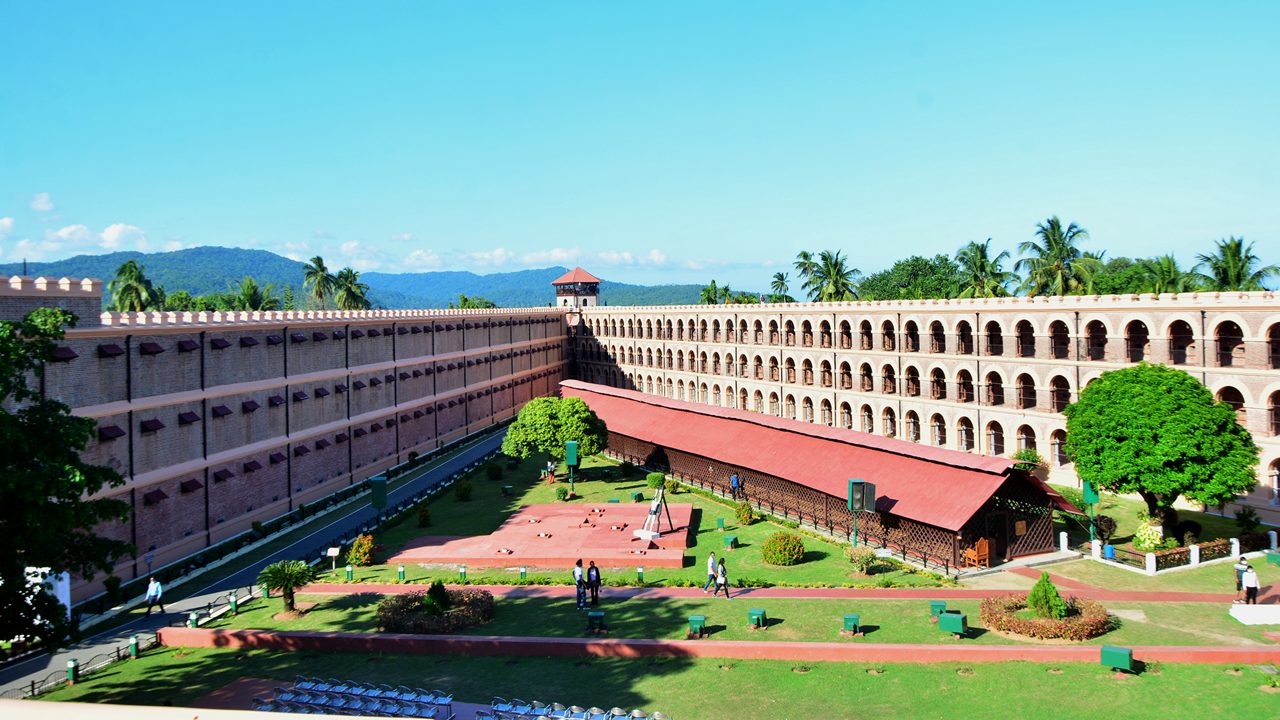
The Cellular Jail, also known as “Kala Pani” (Black Water), is a historic colonial prison located in Port Blair, Andaman and Nicobar Islands, India. It was built by the British between 1896 and 1906 to exile political prisoners and freedom fighters who opposed colonial rule. The remote location and the long overseas journey made it an ideal place for the British to isolate and punish insurgents, as it also threatened prisoners with social exclusion back home. The jail’s architecture was designed for solitary confinement, with a central watchtower and seven wings radiating like spokes of a wheel, containing 696 small individual cells that prevented communication between inmates. The prison was notorious for its harsh conditions, including torture, forced labor, and poor living standards, leading many prisoners to go on hunger strikes. Despite these brutal conditions, the jail became a symbol of India’s struggle for independence and now serves as a national memorial to honor the sacrifices of the freedom fighters imprisoned there. The structure itself is three stories high, with each wing containing cells that had only small ventilators as windows, emphasizing isolation. The design was influenced by the Panopticon theory, enabling a single guard to monitor many prisoners while preventing prisoners from seeing each other. The jail earned a fearsome reputation for severe punishments including torture, handcuffs, fetters, and unhygienic conditions. It was a place of extreme physical and mental hardships imposed on the inmates to suppress their revolutionary spirit. Many prominent Indian freedom fighters, including Batukeshwar Dutt and Vinayak Damodar Savarkar, were held there. After India gained independence, the Cellular Jail was preserved as a historical monument and symbolizes the resilience and sacrifice of the Indian independence movement